

Sodium Humate Supplier Guide: Specs, Applications & Bulk Buying
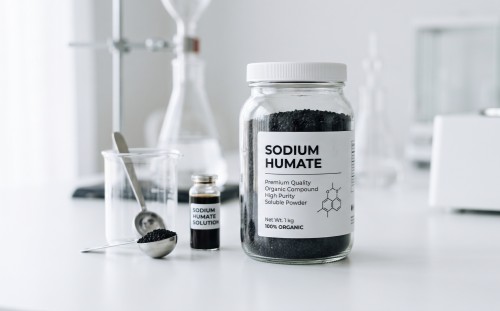
Sodium Humate is a natural organic mineral compound widely used in agriculture, aquaculture, animal feed, and industrial applications due to its strong adsorption, chelation, and biological activity properties.
For professional buyers, selecting Sodium Humate is not only about active ingredient content. Product source materials, extraction technology, solubility, stability, packaging, and application suitability directly influence performance in real-world use.
Greenviki (Beijing) Biotechnology Co., Ltd. provides Sodium Humate products refined from premium natural mineral resources such as weathered coal, lignite, and peat. Through controlled alkaline extraction and advanced processing technologies, the company supplies Sodium Humate in flakes, granules, and powder formats for different application requirements.
What Is Sodium Humate and How Does It Work?
Sodium Humate is the sodium salt of humic acid, produced by reacting natural humic substances with sodium hydroxide under controlled conditions.
The raw materials usually include:
- Weathered coal
- Lignite
- Peat
During processing, naturally occurring humic substances are converted into a water-soluble form containing active functional groups.
The main functional components include:
- Carboxyl groups
- Phenolic hydroxyl groups
- Organic carbon structures
These chemical characteristics give Sodium Humate several important functions:
| Functional Property | Practical Effect |
|---|---|
| Adsorption | Captures organic particles and unwanted substances |
| Chelation | Binds nutrients and trace minerals |
| Complexation | Helps stabilize certain compounds |
| Biological activity | Supports soil, plant, and animal applications |
Because of these properties, Sodium Humate is considered a multifunctional ingredient rather than a single-purpose additive.
How to Evaluate Sodium Humate Quality for Commercial Applications?
When purchasing Sodium Humate in bulk, buyers usually evaluate several technical indicators.
A reliable product specification should clearly define:
| Parameter | Typical Specification |
|---|---|
| Appearance | Black shiny flakes, granules, or powder |
| Humic Acid Content | 55%–70% (dry basis) |
| Water Solubility | ≥95%–99% |
| pH Value | 9.0–11.0 |
| Moisture Content | ≤15% |
| Mesh Size | 80–120 mesh powder available |
Humic Acid Content
Humic acid concentration is one of the primary quality indicators.
Higher humic acid content generally provides stronger functional activity in soil improvement, nutrient management, and feed-related applications.
However, the appropriate grade depends on the final application.
For example:
- Agricultural fertilizers may prioritize organic matter improvement.
- Feed applications may focus on safety, purity, and consistency.
- Industrial uses may require adsorption performance.
Water Solubility
High solubility is important for applications requiring rapid dispersion.
In large-scale agricultural production, poor dissolution may cause uneven distribution during irrigation or fertilizer mixing.
Sodium Humate processed through refined extraction and drying technologies typically provides improved dissolution performance.
Sodium Humate Applications in Agriculture, Aquaculture and Industry
Agricultural Use: Soil Conditioner and Fertilizer Enhancer
Sodium Humate is widely used as an organic fertilizer enhancer because it improves soil structure and nutrient utilization.
Its agricultural functions include:
- Improving soil aggregation
- Increasing water retention capacity
- Supporting nutrient availability
- Enhancing root development
Sodium Humate can also chelate nutrients such as:
- Nitrogen
- Phosphorus
- Potassium
- Trace minerals
This helps reduce nutrient loss and supports more efficient fertilizer management.
For large-scale farming operations, application results depend on soil conditions, crop varieties, and fertilizer programs.
Aquaculture Use: Natural Water Treatment Agent
In aquaculture systems, maintaining water quality is essential for fish, shrimp, crab, and shellfish production.
Sodium Humate can be used as a water conditioning material.
Typical functions include:
- Binding heavy metal ions
- Reducing water turbidity
- Adsorbing organic particles
- Supporting healthier aquatic environments
It may also help reduce stress factors caused by excessive ammonia nitrogen and nitrite accumulation.
However, dosage should always be adjusted according to water parameters and farming conditions.
Animal Feed Use: Functional Feed Additive
Sodium Humate is increasingly used in animal nutrition because of its adsorption and mineral-related properties.
Potential applications include:
- Supporting gastrointestinal health
- Adsorbing undesirable substances in the digestive system
- Improving feed utilization efficiency
Feed manufacturers typically evaluate:
- Heavy metal limits
- Microbial safety
- Batch consistency
- Regulatory requirements
Before commercial feed production, compatibility testing is recommended.
Industrial Applications of Sodium Humate
Beyond agriculture, Sodium Humate has multiple industrial uses.
Common applications include:
Petroleum Drilling
Used as a drilling mud additive to help control viscosity and improve fluid performance.
Wastewater Treatment
Its adsorption characteristics allow it to assist in binding certain pollutants and heavy metal ions.
Ceramic and Construction Materials
Used as an additive to influence processing characteristics.
Industrial Water Systems
Applied as a functional additive in certain scale and corrosion control processes.
Choosing a Sodium Humate Supplier for Bulk Orders
For international buyers, supplier selection should consider more than product price.
A practical evaluation process includes:
1. Confirm Raw Material Source
Natural mineral origin affects product stability and active component levels.
Buyers should request information about:
- Mineral source
- Processing method
- Batch traceability
2. Review Manufacturing Process
Production technology influences:
- Solubility
- Purity
- Moisture control
- Product consistency
Advanced extraction and spray-drying processes can improve final product performance.
3. Verify Quality Documentation
Commercial buyers may require:
- Product specification sheets
- Batch test reports
- Safety documentation
- Application guidance
For agricultural and feed markets, compliance requirements may vary by country.
4. Evaluate Packaging and Supply Capability
Sodium Humate is commonly supplied in:
- 10 kg bags
- 20 kg bags
- 25 kg woven bags
- Jumbo bags
Packaging selection depends on transportation requirements and customer application.
Why Greenviki Sodium Humate Supports Industrial-Scale Applications
Greenviki (Beijing) Biotechnology Co., Ltd. combines biotechnology research capability with industrial production experience.
The company has established cooperation projects with scientific research institutions including the Dalian Institute of Chemical Physics, Chinese Academy of Sciences and Dalian University of Technology.
Its manufacturing approach focuses on:
- Stable raw material sourcing
- Controlled extraction processes
- Consistent product specifications
- Customized packaging solutions
The company’s experience in bio-based products and health-related industries supports its ability to provide standardized materials for agriculture, animal nutrition, and industrial customers.
For distributors and manufacturers requiring reliable Sodium Humate supply, product consistency and technical support are key factors for long-term cooperation.
4. FAQ
What is Sodium Humate mainly used for?
Sodium Humate is mainly used in agriculture as a soil conditioner and fertilizer enhancer. It is also applied in aquaculture, animal feed additives, wastewater treatment, drilling fluids, and industrial processing.
What is the difference between Sodium Humate and Humic Acid?
Humic Acid is the natural organic compound, while Sodium Humate is its sodium salt form. Sodium Humate has higher water solubility, making it easier to use in liquid formulations and agricultural applications.
What Sodium Humate specification should fertilizer manufacturers choose?
The suitable specification depends on the fertilizer formula and application method. Buyers usually evaluate humic acid content, solubility, moisture level, and compatibility with other nutrients.
Can Sodium Humate be used as an animal feed additive?
Yes, Sodium Humate can be used in animal nutrition applications. However, feed manufacturers should confirm product safety parameters and comply with local feed regulations before commercial use.
What packaging options are available for bulk Sodium Humate orders?
Common packaging includes 10 kg bags, 20 kg bags, 25 kg woven bags, and customized jumbo bags depending on transportation and customer requirements.
How should Sodium Humate be stored?
Sodium Humate should be kept sealed in a dry environment and protected from moisture and direct sunlight to maintain product stability.